


This piece was featured in Issue 25 of Works in Progress. Subscribe today to get Issue 26, and an issue every two months after, delivered straight to your home or workplace.

In 1983, a biochemical company called AGS filed an application to release genetically modified organisms into the environment. AGS had deleted a single gene from a common leaf-dwelling microbe that encoded a protein around which ice crystals nucleate. By removing it and spraying the modified microbes onto plants, AGS hoped to prevent ice from forming on crops during cold California mornings.
At the time, there was no dedicated regulatory process for engineered microbes, so applications defaulted to the National Institutes of Health (NIH), which had laid out voluntary rules and approved AGS’s request to run field trials. But an activist named Jeremy Rifkin then sued to stop the experiments, arguing that the NIH had skipped a required Environmental Impact Statement and that the engineered microbes could scatter into the wild with ‘possible effects on rainfall’. AGS eventually won the right to begin trials on strawberry plants in California in 1987, only for a group of activists to cut through the chain-link fence around the field and uproot about 2,000 of the 2,400 plants.
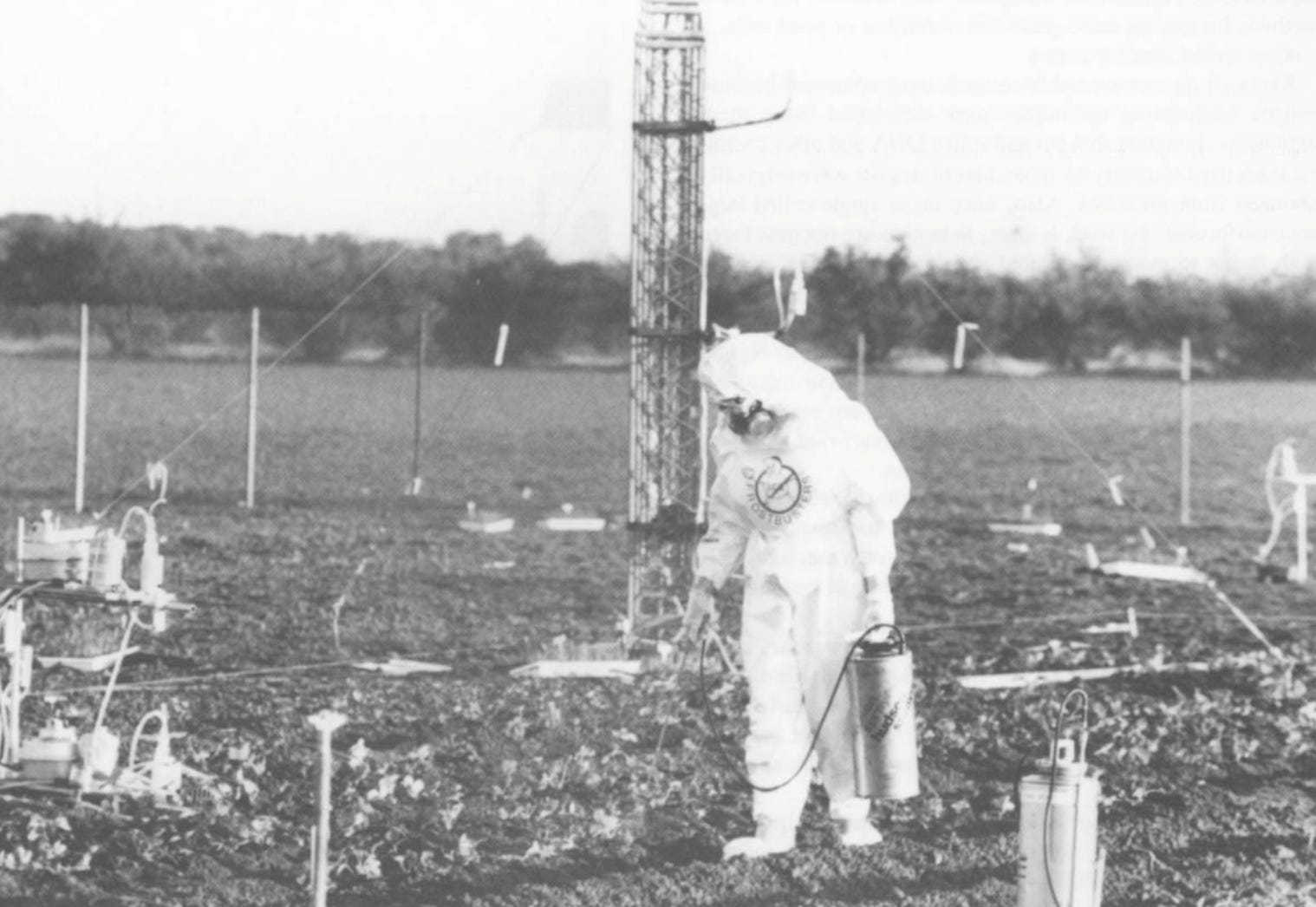
Rifkin’s lawsuit forced the question of how engineered microbes should be regulated. After the court case, staff at the White House gathered lawyers and regulators from the Environmental Protection Agency (EPA) and the United States Department of Agriculture (USDA) to figure out how to handle engineered microbes moving forward. They concluded that no new laws were needed: the Toxic Substances Control Act (TSCA), written in 1976 for industrial chemicals, would apply to engineered microbes as well. These civil servants essentially decided that since genomes are made of chemicals, and novel chemicals are already regulated under the TSCA, engineered microbes with modified genomes were likewise covered.
Since that decision, development of microbes covered by the law has frozen. The TSCA is a regulatory black hole: between 1987 and 2018, researchers filed more than 240 applications. Only a few were ever approved for widespread use.
The world has produced all kinds of marvelous microbes in the last forty years. Genetically engineered microorganisms, for example, can pull nitrogen from the air and detect buried landmines by releasing gases visible to satellites. But almost none have been used, thanks to an American law never meant to regulate biology.
Microbes in limbo
In 2016, Japanese researchers discovered a microbe, Ideonella sakaiensis, growing near a recycling plant. That microbe is able to digest PET, the plastic in water bottles and most polyester clothing. Though technically recyclable, PET must first be shredded, melted, and remolded into new forms, so most just accumulates in landfill.
These wild microbes took an existing protein that degrades cutin (the waxy material on plant leaves) and evolved it to eat plastic instead. But natural forms of the PET-eating enzymes are slow; when the microbes were cultured on top of a thin PET film and incubated at 30 degrees centigrade, it took them six weeks to break it down.
Engineers at the University of Texas at Austin therefore took these PET-eating enzymes and used computational tools to make an improved variant, called FAST-PETase. This enzyme is 98 percent identical to the natural version but digests PET plastics in less than 24 hours. The next step could be to place FAST-PETase back into living cells and release them onto landfills. But even putting the gene back into its original host, I. sakaiensis, triggers TSCA, ensuring that the reconstituted organism can’t be used.
Engineered microbes could also be employed to detect heavy metals in streams and rivers at low concentrations far more cheaply than existing methods. Researchers have already created E. coli that can detect as little as five parts per billion of cadmium ions. In 2010, Chinese students engineered E. coli cells to sense mercury ions in water down to a seven-nanomolar concentration, seven times lower than the EPA’s contamination threshold. But none of these strains can be used outside the lab as all contain intergeneric DNA sequences, meaning they fall under TSCA.
Mining is another missed opportunity. Most metal in ore is discarded, because purification processes generally extract only a single target metal, rather than several at once. The US has enough active mines to meet all of its domestic mineral needs if it could capture 90 percent of the remaining byproducts in the ore. Yet when recovery does happen, it is energy-intensive and usually involves harsh chemicals that release toxic gases.
Bioleaching, a process that uses microbes to recover metals, might be a better option. This is typically done by employing microbes to oxidize iron and sulfur in sulfide ores, kicking off a chain reaction that dissolves out the copper. The same reactions happen without microbes, just too slowly to be industrially useful. Microbes are self-powering and could do the job without making toxic byproducts.
To make bioleaching more efficient, researchers turned to Gluconobacter oxydans B58, a microbe that converts sugars into mineral-dissolving acids. In a 2021 study, Cornell researchers found that 89 genes are involved in making these acids and that, by deleting some while overexpressing others, they could make a variant that extracts rare earth metals 73 percent faster than the ordinary microbe. Those changes didn’t cross genus lines, but even this kind of workaround is frowned upon because deleting a particular gene in a microbe requires introducing a marker, typically an antibiotic resistance gene from another organism, that allows only engineered cells to survive when exposed to antibiotics. As this gene comes from a different organism, adding it can trigger TSCA all by itself.
How the microbes got their prison
Regulating something under the TSCA means it falls under the Environmental Protection Agency (EPA). On the basis of the 1986 decision to use the TSCA to regulate microbes, the agency issued a warning that it now had to approve any plans involving microorganisms formed by combining genetic material from organisms of different genera. (A genus, plural genera, is the subdivision that comes above ‘species’ in the tree of life. Humans, Homo sapiens, are the only surviving species in the genus Homo.)
Only a few have ever been approved for commercial use. One, in 1997, was a microbe approved for limited commercial use, as a nitrogen-fixing biofertilizer in alfalfa. Companies do not always know why the EPA rejects their applications for engineered microbes as the EPA has never published a checklist of requirements. Companies submit applications based on their best guesses about what the EPA will want to know. At the end of this back and forth, the agency gives one of three verdicts: no unreasonable risk, in which case the company can move ahead after a ninety-day waiting period; unreasonable risk, meaning the application is fully blocked; or a Section 5(e) consent order, equivalent to indefinite regulatory purgatory.
The consent order is meant for cases where the agency can’t rule out risk. It essentially amounts to a ban on using the microbe as it was intended. It caps production volumes and dictates how the microbes must be destroyed. In some cases, the agency has ordered companies to incinerate every soil sample, liquid, or surface the microbes touched until none can be detected.
When used to regulate chemicals, the TSCA obliges the EPA to make application details available to the public. But the EPA mandates the opposite for engineered microbes. Applications filed under the biotechnology rule are kept private, meaning that people living near proposed release sites have no way of knowing which organisms are being tested. This privacy also means that companies cannot learn from earlier filings, wasting millions of dollars on developing microbes that will never get approval.
Escaping the labyrinth
A handful of companies have found workarounds. Pivot Bio, for example, sells genetically engineered microbes that colonize plant roots and convert atmospheric nitrogen into ammonia. The company says that their microbes can replace about a quarter of the synthetic fertilizer that farmers normally use without affecting crop yields. This would reduce the amount of fertilizer leaching into water, save farmers money, and also save an enormous amount of energy, since making synthetic fertilizer currently accounts for 1–2 percent of global energy use. Pivot’s microbes are sprayed over millions of acres of land each year and, in 2022 alone, replaced an estimated 32,000 tons of synthetic fertilizer.
Pivot dodged TSCA by reshuffling genes within a single organism instead of importing DNA from another species. While the method works, gene shuffling is not always possible. For many tasks, like leaching metals or degrading plastic, the necessary genes don’t exist in any organism that’s easy to engineer or hardy enough to survive in the field.
Some engineered microbes have avoided the black hole of TSCA because the way they are classified means they are evaluated elsewhere. Microbes meant as pesticides go to the EPA’s biopesticide office. Agricultural products may be reviewed by the USDA’s Animal and Plant Health Inspection Service. Ingestible therapeutics go to the FDA. These microbes still end up in the environment anyway, via runoff, sewage, and toilets, but because they avoided the TSCA, they can be developed quickly and sold to consumers.
Bacillus subtilis is a very common bacterium that lives in soil and decaying organic material, and on the surfaces of plants. A company called ZBiotics has engineered a strain of the bacterium that breaks down acetaldehyde, a molecule created when the body breaks down alcohol, and responsible for much of the bodily damage caused by drinking. The engineered bacteria are sold as a small probiotic drink to be consumed before drinking alcohol. The FDA does not require pre-market approval for foods or dietary supplements, so all ZBiotics had to do was show that the organism they’re using, B. subtilis, is Generally Recognized as Safe, which it is, and then start selling it.
Another company, Lantern Bioworks, sold an engineered microbe designed to prevent cavities. A major cause of cavities is a bacterium called Streptococcus mutans that lives in the mouth and secretes acid that erodes teeth. Lantern created a version of S. mutans that was identical except for lacking the gene to make the acid and producing a targeted antimicrobial compound that kills the original S. mutans instead. The idea was that it would form a permanent harmless presence in the mouth, outcompeting the cavity-causing natural Streptococcus.
Critics argued that the company should be required to go through FDA approval if it wanted to make claims about cavity prevention, but Lantern marketed their engineered microbes as a cosmetic, rather than a drug, and so were able to get around the FDA’s more rigorous drug approval process. Unlike ZBiotics’s modified B. subtilis, which pass through the digestive system, Lantern’s bacteria were designed to colonize the mouth permanently. Long-term effects on the oral microbiome are not known, and it is also plausible that the engineered microbes could transfer to other people through kissing, for example.
These two cases show how easily engineered microbes are evaluated and reach consumers when a different agency is in charge. Engineered microbes designed as biopesticides use intergeneric DNA, but go through the EPA’s biopesticide registration process. ZBiotics similarly uses intergeneric DNA in its bacteria, but because those organisms are eaten rather than released into the environment, they fall to the FDA.
The case for caution
The White House staff had reasonable grounds for covering engineered microbes with the TSCA. In the mid-1980s, almost no field data existed on engineered microbes in the wild. No one knew whether they would persist, outcompete native species, or cause harm. The worry was that a microbe, unlike a chemical, would keep replicating after release. Microbes can also swap DNA with native organisms, so an uncontrolled release might spread engineered genes in unpredictable ways.
For chemicals, TSCA treats every novel molecular structure as a ‘new chemical substance’ requiring full pre-market review. Even a single atom difference between two molecules is enough to trigger this regulatory process. Once the White House staff decided in the 1980s that microbes were also ‘chemical substances’, they needed a test for novelty, and picked the genome. Under a 1997 EPA rule, combining DNA from species across different genera triggers review, even if the resulting organism is demonstrably safe.
But using the TSCA to regulate biology doesn’t make scientific sense. The White House team assumed cross-genus gene transfers were rare in nature, and that they therefore deserved extra scrutiny. They were wrong. Cross-genus DNA transfers happen constantly in the wild. One study of 93,000 microbial genomes found cross-genus DNA swaps in roughly a third.
Another problem is that genera are human constructions to help organize species into a taxonomy, rather than directly observable traits of organisms. Taxonomists frequently rearrange relationships between species, especially among microorganisms, where lines of genetic descent can criss-cross confusingly. In 2020, researchers reclassified hundreds of microbial species in the Lactobacillus genus, including many organisms found in probiotics and fermented foods. Swapping genes between these organisms before 2020 would not have triggered TSCA, but would today.
In the forty years since the White House’s decision, researchers have collected much more data about engineered microbes in the environment. Dozens of field trials have tracked how long engineered microbes persist, how far they spread, and how often they swap genes with natives.
These data show that engineered organisms introduced into the environment mostly die off quickly, because they are not adapted to that environment and get outcompeted by native organisms. A population of E. coli from the laboratory, for example, dropped 100,000-fold in soil within eight days. Engineered microbes do swap DNA with locals, but inconsistently, and it’s not clear yet when and why.
The risks are still real, though. Some microbes engineered to live alongside plant roots persist in soil for decades. An engineered phenol-eating microbe released by Estonian researchers in the 1980s left traces of its inserted gene in the soil that can still be found today. In some cases, engineered genes can linger in the environment for decades.
Reforming TSCA, therefore, shouldn’t mean throwing open the doors to any and every engineered microbe. Instead, it should mean setting clear standards for data and field trials, so that microbes with obvious benefits and minimal risks can actually be used, while riskier ones are restricted.
The EPA does not even apply TSCA consistently: it is harsher on microbes than on chemicals. If researchers want to run a small-scale experiment with a new chemical, TSCA allows exemptions from the EPA review process. But if researchers want to do the same thing with an engineered microbe, the EPA revokes these Congressionally-legislated exceptions.
The fix everything easily switch
The TSCA could change tomorrow. Because Congress never codified TSCA’s application to biology, the EPA administrator could fix it by memo, clarifying evaluation criteria, releasing three decades of old case files, and telling companies what data the agency actually wants. No acts of Congress would be required.
The other option is to act through Congress. In 2016, Congress authorized the EPA to collect user fees from chemical companies that submit TSCA applications. These funds help fund the agency. However, that authority expires midway through 2026. Congress needs to pass legislation to renew it, so there is a unique opportunity to also attach broader reforms to that bill.
Other countries have working systems. Brazil approved the first unconstrained, environmental release of an engineered insect, a variant of the Aedes aegypti mosquito, which carries diseases like dengue fever and Zika virus. The modified males carry a gene that kills their offspring at the larval stage. Adding them to the population means they compete with ordinary Aedes males for mating opportunities. Since females mate only once, females who mate with them produce no surviving offspring. In Brazilian cities where they’ve been released, wild populations have dropped 80 to 96 percent. Brazilian companies have also received government approval to ferment engineered bacteria in bioreactors and then spread the spent biomass onto farmland as a soil treatment.
Israel is even more efficient with its approval process. Any scientist who wants to release engineered microbes into the wild simply sends an application to a panel of government representatives and academics led by the Ministry of Agriculture explaining their plan. The committee requests data, and then provides a definitive yes or no. This process usually takes only a few months. In 2017, researchers created microbes that could sense explosives and emit light in response. They received approval to release them in the Israeli desert in under a year.
It is not necessary for the United States to adopt anything as permissive as this. But America does need regulation that biotechnologists can actually navigate. As written, the Toxic Substances Control Act is the black hole of biology. It’s why plastic-eating and mine-seeking microbes, for all their promise, have never left the lab.
Niko McCarty is the founding editor at Asimov Press.
With thanks to Yonatan Chemla, Christopher Wozniak, and Jai Padmakumar for their comments.
Really well done piece, and the history of how the 1986 decision actually got made is the part I had not seen laid out this clearly.
The Lactobacillus example is the sharpest move here. Nothing about those organisms changed in 2020, but the regulatory status of swapping genes between them did, which is about as clean a demonstration as you could ask for that the trigger tracks nomenclature rather than biology.
What your field-trial section suggests is that the replacement axis is already sitting in the data you cite. Persistence and spread are measurable properties of a strain in a given environment, and the two cases you give sit at opposite ends: lab E. coli collapsing 100,000-fold in soil in eight days, and the Estonian phenol degrader whose insert is still detectable decades later. Those two could be identical on the genus test and completely different on the question anyone actually cares about. It would also give the consent order something real to key off, instead of being where applications go when nobody can name the risk.
This is great, and very practical and actionable. Thanks!
Hannah Ritchie has made related points (as have I): https://mattball.substack.com/p/several-notes-on-gmos
It is incredible how much human suffering there is because of this attitude.